
For businesses in Roseville, CA, maintaining a comfortable indoor environment is not just about employee well-being; it’s crucial for productivity and customer satisfaction. As the years pass, commercial heating systems face wear and tear, eventually leading to costly breakdowns and inefficient operation. We understand the challenges property managers and business owners face when their heating system falters. When faced with an aging or failing unit, knowing when and how to approach commercial furnace replacement in Roseville, CA, becomes a critical decision. This guide will walk you through everything you need to know about keeping your commercial property comfortable and efficient.
To learn more about optimizing your commercial HVAC systems, [Contact us for expert commercial HVAC services today].
Key Indicators That Your Property Needs Professional AC and Heating Services
Identifying the right time for a commercial furnace replacement in Roseville, CA, can save your business significant money and prevent disruptive downtime. While commercial HVAC systems are built to be robust, they don’t last forever. Most commercial HVAC systems typically serve their purpose for about 15 to 20 years. If your system is nearing or has surpassed this age, it’s wise to start considering replacement, especially given Roseville’s climate, which can put considerable stress on heating and cooling units throughout the year.
Beyond age, several other signs indicate that your commercial furnace might be ready for an upgrade. Frequent repairs are a major red flag; if you’re constantly calling technicians, the cumulative cost of fixes can quickly outweigh the investment in a new, more reliable system. Similarly, a noticeable increase in your utility bills, without a corresponding change in usage, often points to an inefficient, aging furnace struggling to maintain desired temperatures. Uneven heating across your commercial space, strange noises coming from the unit, or a general decline in indoor air quality all strongly indicate that you should call an HVAC professional.
A critical factor for many businesses with older systems is the R-22 refrigerant phase-out. Production of R-22 (Freon) was phased out in 2020 due to its harmful effects on the ozone layer. For systems still using this refrigerant, repairs requiring a recharge have become increasingly expensive and difficult as supplies dwindle. This makes replacement a financially sound decision for many businesses still relying on R-22 units, as continuing to repair them can become more costly than investing in a new, compliant system.
Telltale Signs of a Failing Heating System
Beyond the broader indicators, your commercial furnace often provides specific, undeniable clues that it’s on its last legs. Paying attention to these telltale signs can help you act proactively before a complete system breakdown.
- Short-Cycling:If your furnace turns on and off frequently without completing a full heating cycle, it’s known as short-cycling. This not only wastes energy but also puts excessive wear and tear on components, leading to premature failure.
- Rattling or Grinding Noises:Unusual sounds like rattling, grinding, squealing, or banging coming from your furnace often indicate mechanical stress, loose parts, or issues with the motor or blower. These noises should never be ignored.
- Burning Smells:While a slight burning smell might be normal when a furnace is first turned on after a long period of disuse (due to dust burning off), a persistent or strong burning odor could signal overheating electrical components, a clogged filter, or other serious issues that pose a fire hazard.
- Poor Airflow:If you notice weak airflow from your vents, or if some areas of your building are significantly colder than others, your furnace might be struggling. This could be due to a failing blower motor, clogged ducts, or an undersized system.
- Moisture Accumulation:Any signs of water leaks or excessive moisture around your furnace could indicate a problem with the condensate drain line, heat exchanger, or other critical components.
- Yellow Burner Flame:For gas furnaces, the burner flame should typically be blue. A yellow or orange flame can indicate incomplete combustion, which can produce carbon monoxide—a dangerous, odorless gas. This is a critical safety concern that requires immediate professional inspection.
Why Proactive AC and Heating Services Prevent Costly Breakdowns
Waiting for a commercial furnace to completely fail before addressing its issues can lead to significant disruptions for your business, including unexpected closures, loss of productivity, and uncomfortable conditions for employees and customers. Proactive AC and heating services, particularly regular preventative maintenance, are essential for avoiding these scenarios and ensuring the long-term health of your system.
Routine maintenance can prevent breakdowns during peak heating or cooling seasons, ensuring your business remains operational and comfortable year-round. It’s not just about avoiding emergencies; consistent care significantly extends equipment lifespan, often allowing systems to reach the upper end of its 15-20 year expected life. Moreover, well-maintained systems operate more efficiently, which translates directly to lower utility bills and reduced energy consumption. This focus on operational safety and energy conservation makes preventative care a smart business strategy. For comprehensive insights into maintaining your commercial HVAC system and understanding when replacement becomes the most cost-effective solution, exploring dedicated resources on AC & Heating services can provide invaluable guidance.
Selecting the Ideal Heating and Cooling System for Roseville Businesses
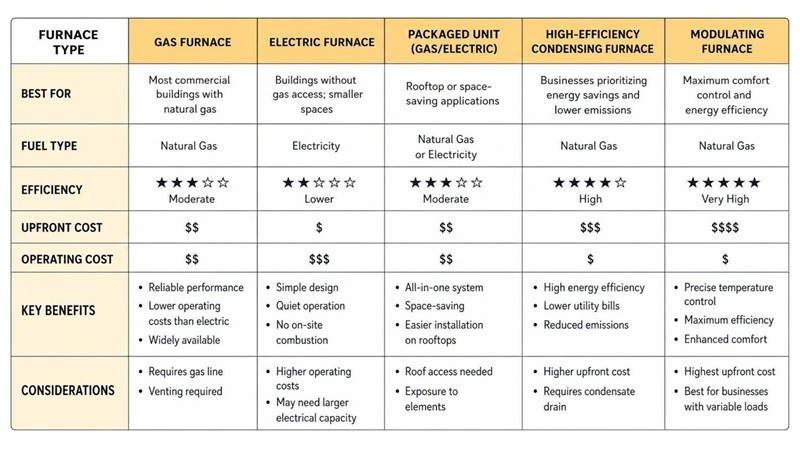
Choosing the right commercial furnace for your Roseville property involves more than just picking the newest model. It requires a strategic assessment of your building’s specific needs, the local climate, and your operational goals. Key factors include the building’s size and layout, the desired energy efficiency ratings, and advanced features like zoning capabilities and smart controls.
Roseville’s climate, with its hot summers and cool winters, demands a robust HVAC system capable of handling significant temperature swings. When selecting a new system, understanding key metrics like SEER (Seasonal Energy Efficiency Ratio) for cooling and EER (Energy Efficiency Ratio) for overall energy efficiency is crucial. Modern systems boast significantly higher SEER and EER ratings than units from even 10-15 years ago, meaning they can provide the same level of comfort using far less energy.
Zoning capabilities allow you to control temperatures independently in different areas of your building, catering to varying needs and reducing energy waste in unoccupied spaces. Smart controls and building automation systems offer advanced scheduling, remote monitoring, and diagnostic capabilities, giving you greater control over your HVAC operations and further optimizing energy use.
Common Types of Commercial HVAC Systems
The commercial HVAC landscape offers a variety of system types, each with its own advantages depending on the building’s structure, size, and specific heating and cooling requirements.
- Single-Split Systems:These are common in smaller commercial spaces. They consist of an outdoor unit (condenser and compressor) and an indoor unit (evaporator and air handler), connected by refrigerant lines. They are ideal for individual zones or smaller buildings.
- Multi-Split Systems:Similar to single-split systems, but one outdoor unit can connect to multiple indoor units, allowing for individualized control in several zones. This offers more flexibility than a single-split system for properties with diverse heating and cooling needs.
- Variable Refrigerant Flow (VRF) / Variable Refrigerant Volume (VRV) Systems:These advanced systems use refrigerant as the primary cooling and heating medium, allowing for precise temperature control in multiple zones simultaneously. VRF technology can even provide simultaneous heating in one zone and cooling in another, making them incredibly energy-efficient and adaptable for complex commercial environments.
- Packaged Rooftop Units:Widely used in larger commercial buildings, these self-contained units house all heating, cooling, and ventilation components in a single cabinet, typically installed on the roof. They are known for their durability, ease of maintenance, and ability to handle significant loads.
How to Choose the Best AC and Heating Services in Roseville, CA
Selecting the right HVAC contractor for your commercial furnace replacement is as important as choosing the right equipment. A reputable contractor ensures proper installation, maximizes efficiency, and guarantees the longevity of your investment.
When searching for a commercial HVAC partner in Roseville, prioritize companies with proven local experience. Familiarity with Roseville’s specific climate challenges and local building codes is invaluable. Always ensure that the contractor is fully licensed and insured, protecting your business from any liabilities. Look for NATE-certified technicians; North American Technician Excellence (NATE) certification is the industry’s gold standard, indicating a high level of technical proficiency and expertise.
A comprehensive service provider should offer more than just installation. They should assist with system design, including conducting thorough load calculations to ensure your new furnace is perfectly sized for your building. Responsive customer support and emergency services are also critical, as commercial HVAC issues can arise unexpectedly and require immediate attention. Demand transparent pricing with detailed estimates and inquire about warranty protection for both equipment and labor.
The Professional Process for Commercial Furnace Replacement
The process of commercial furnace replacement is a significant undertaking that requires careful planning and expert execution. It’s not merely a swap of old for new; it’s an opportunity to optimize your building’s heating performance and energy efficiency for years to come. A professional approach ensures minimal disruption to your business operations and maximizes the return on your investment.
The process typically begins with a thorough professional assessment of your existing system and your building’s current heating and cooling needs. This includes evaluating ductwork, insulation, and any potential issues that could impact the new system’s performance. Once the new system is selected, the old equipment will be carefully decommissioned and removed, often requiring specialized tools and adherence to environmental regulations, especially if refrigerants are involved.
The installation phase involves precise system integration, connecting the new furnace to existing ductwork, electrical systems, and fuel lines. This is where the expertise of NATE-certified technicians truly shines, ensuring every component is installed correctly and safely. Professional installation is also crucial for maintaining manufacturer warranty validity, as improper installation can void warranties and leave your business exposed to future repair costs.
System Sizing and Load Calculations
One of the most critical steps in commercial furnace replacement is accurate system sizing. An improperly sized furnace—whether too small or too large—will lead to inefficiencies, discomfort, and premature system failure. This is where comprehensive load calculations come into play.
A professional HVAC contractor will conduct a detailed assessment that goes beyond simple square footage. They will consider various factors, including:
- Building Square Footage and Layout:The total area to be heated and the floor plan significantly influence capacity requirements.
- Occupancy Rates:The number of people regularly occupying the space generates body heat, which impacts heating needs.
- Heat Output from Equipment:Commercial kitchens, server rooms, and other equipment can generate substantial heat, which must be factored into the overall load.
- Building Envelope:Factors like insulation levels, window types, and roof materials affect heat loss and gain.
- Local Climate Data:Roseville’s specific temperature extremes and humidity levels are crucial inputs for accurate calculations.
Based on these factors, a customized system design is developed, ensuring the new furnace has the optimal capacity to efficiently and consistently heat your commercial building, regardless of external conditions.
Ensuring Proper Ventilation and Indoor Air Quality
Beyond temperature control, a modern commercial furnace replacement offers a prime opportunity to significantly enhance indoor air quality (IAQ) within your business premises. Good IAQ is vital for the health and productivity of employees, as well as the comfort and impression of customers.
New commercial HVAC systems can incorporate advanced filtration options, such as MERV (Minimum Efficiency Reporting Value) 13 or higher filters, which are capable of capturing smaller particles like pollen, dust mites, mold spores, and even some bacteria and viruses. This is a substantial upgrade over older systems that often had basic filtration.
Humidity control is another essential aspect of IAQ. Excessive humidity can lead to mold growth and an uncomfortable, sticky environment, while air that is too dry can cause respiratory irritation. Modern systems can integrate humidifiers or dehumidifiers to maintain optimal indoor humidity levels. Furthermore, proper mechanical ventilation ensures a continuous exchange of stale indoor air with fresh outdoor air, diluting pollutants and improving overall air circulation. Investing in these IAQ enhancements during a furnace replacement can lead to fewer employee sick days, increased focus, and a more pleasant and professional environment for everyone entering your commercial space.
Frequently Asked Questions About Commercial Heating
Property managers and business owners often have many questions when considering a commercial furnace replacement. Here, we address some of the most common inquiries to help you make informed decisions about your commercial HVAC system.
How long does a commercial HVAC system typically last?
Manufacturers design most commercial HVAC systems to last between 15 and 20 years. However, several factors heavily influence their actual lifespan, so manufacturers cannot guarantee it.The quality of the initial installation plays a crucial role, as does the consistency of professional maintenance throughout its operational life. Systems that receive regular tune-ups and timely repairs tend to last longer. Additionally, the intensity of use and the local climate can impact longevity. In Roseville, CA, where systems work hard to combat both summer heat and winter chill, proactive care is particularly important to ensure your unit reaches the upper end of its expected lifespan. Without consistent maintenance, even a high-quality system might fail prematurely.
What are the latest trends in commercial HVAC technology?
The commercial HVAC industry is continuously evolving, driven by demands for greater energy efficiency, comfort, and control. Some of the most impactful latest trends include:
- Smart Thermostats & Building Automation Systems (BAS):These technologies go beyond simple temperature control. Smart thermostats can learn occupancy patterns and adjust settings automatically, while comprehensive BAS integrate HVAC with lighting, security, and other building systems for centralized management, optimized performance, and remote access.
- Variable Refrigerant Flow (VRF) Technology:As mentioned earlier, VRF systems are gaining popularity due to their ability to provide simultaneous heating and cooling to different zones, offering unparalleled energy efficiency and comfort customization.
- Energy Management Systems (EMS):These systems collect and analyze data on energy consumption, helping businesses identify inefficiencies, track performance, and implement strategies to reduce utility costs and their carbon footprint.
- Improved Air Filtration and Purification:With a growing focus on indoor air quality, new systems are incorporating advanced filtration (e.g., higher MERV ratings), UV-C light technology, and other purification methods to create healthier indoor environments.
These innovations offer businesses opportunities to not only save on operating costs but also to create more comfortable and healthier spaces.
How does a new HVAC system affect my building’s energy efficiency?
A new commercial HVAC installation can dramatically improve your building’s energy efficiency and significantly lower operating costs. Manufacturers engineer modern systems with advanced technologies that allow them to produce the same amount of heating or cooling while consuming far less energy than older systems.
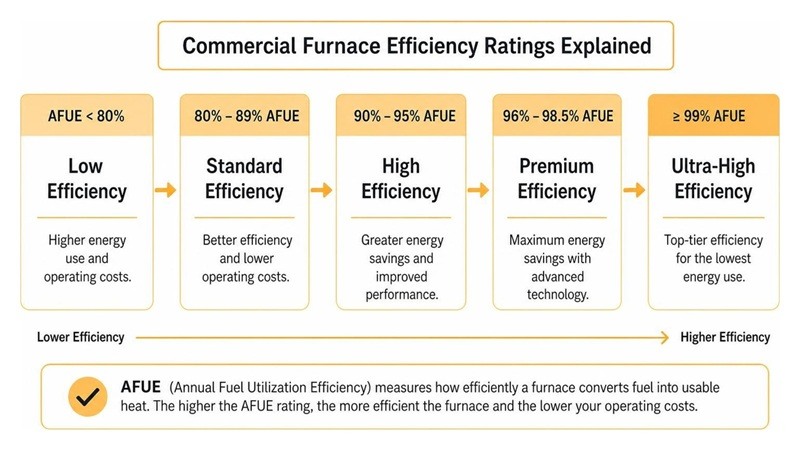
Higher SEER (Seasonal Energy Efficiency Ratio) and EER (Energy Efficiency Ratio) ratings primarily reflect this improved efficiency.For heating, manufacturers design modern furnaces with more efficient burners, improved heat exchangers, and variable-speed fan motors that optimize energy use.The result is a substantial reduction in your monthly utility bills. Beyond the immediate cost savings, a more energy-efficient system also contributes to a reduced carbon footprint, aligning with growing environmental responsibility goals. Investing in a new, high-efficiency commercial furnace is a strategic decision that pays dividends through immediate savings and long-term sustainability.
Conclusion
Choosing reliable AC and heating services, particularly for a commercial furnace replacement in Roseville, CA, is a strategic business decision that extends far beyond simply restoring warmth. It’s an investment in your property’s long-term comfort, operational efficiency, and overall value. By understanding the key indicators for replacement, exploring modern system options, and partnering with a qualified local HVAC contractor, you can transform a necessary upgrade into a significant advantage for your business.
Choosing professional installation allows experienced technicians to size your new system correctly, integrate it expertly, and provide valid warranty coverage, giving you peace of mind and optimal performance.Furthermore, leveraging the latest trends in HVAC technology can lead to substantial energy savings, improved indoor air quality, and enhanced control over your building’s environment. In Roseville’s dynamic climate, a new, high-efficiency commercial furnace is not just about staying warm; it’s about creating a consistently comfortable, productive, and cost-effective environment for your employees and customers well into July 2026 and beyond.