
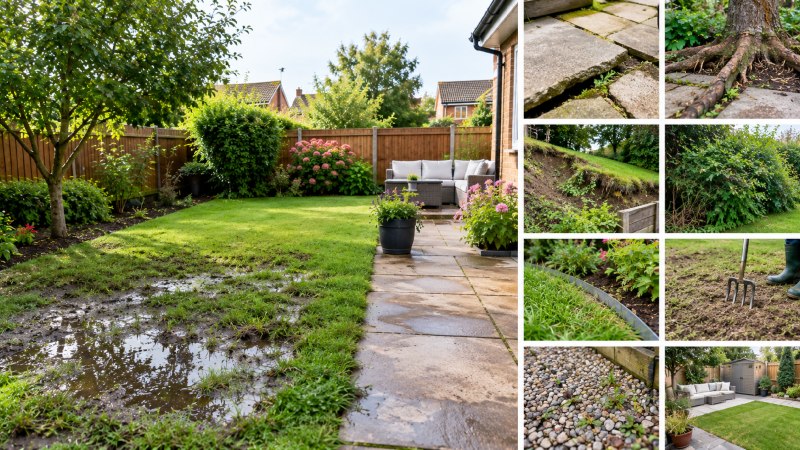
Somewhere between dragging out a rusty mower in April and staring at a waterlogged yard in November, most UK homeowners master the art of ignoring outdoor trouble.
We tend to blame the wet British weather, throw on a raincoat, and promise ourselves we will tackle the backyard next weekend.
However, turning a blind eye to small garden quirks usually transforms simple maintenance into an expensive headache.
So, here are the eight classic warning signs you should stop ignoring right now.
Poor Garden Drainage That Gets Worse Every Winter
It’s dangerously easy to write off standing water on your lawn as just another unavoidable soggy spell.
However, persistent pooling robs grass roots of vital oxygen, turning what should be lush turf into a sour, anaerobic mud bath.
Water also trickles under your patio and collects around your decking frame. When that trapped water freezes over winter, it expands and shifts the sand beneath your paving slabs.
At the same time, the hidden wooden beams under your decking sit in damp soil and slowly rot away. By the time you notice a wobbly slab or a spongy deck board, the hidden damage is already done.
Digging narrow land drains, installing soakaways, or simply spiking clay areas with sharp sand gives rainwater somewhere to go, preserving both your turf and your patio foundations.
Tree Roots Damaging Paths and Patios
That big cherry tree in your garden might look lovely, but its underground root system will always be searching for water and room to grow. As those roots thicken beneath your garden, they’ll act like mini hydraulic jacks.
What does that mean? It means that they’ll slowly tilt heavy paving slabs, crack concrete borders, and turn smooth stone paths into dangerous tripping hazards.
Ignoring a small bump in your patio now just gives root damage more time to spread across your entire terrace or driveway.
To prevent this issue from happening, we recommend installing root barriers early or trimming shallow lateral roots. This’ll stop your stonework from buckling, saving you from a full rebuild later.
Sloping Gardens Causing Soil to Wash Away
After a heavy downpour hits a sloped lawn, you might notice your best topsoil has vanished straight down the garden. This continuous washing away leaves delicate plant roots exposed to harsh winter frost and scorching summer sun.
All that displaced silt eventually settles at the bottom of the bank, smothering healthy turf and blocking your drains.
If you leave bare slopes alone, you’ll end up with a barren slope that refuses to grow grass or flowers.
Building low timber retaining walls or planting deep-rooting shrubs anchors your soil permanently so it stops washing away.
Shrubs That Have Outgrown the Garden
Remember that cute little potted shrub you brought home five years ago? It has probably transformed into a sunlight-stealing monster by now.
When bushes grow unchecked, they end up blocking natural light, choking off healthy airflow, and creating dark, damp spaces for garden pests.
All that dense foliage gradually swallows up floor space, leaving modest backyards feeling claustrophobic and dark.
If you let fast-growing shrubs run wild, they’ll eventually starve neighbouring flowers of light and soil space until nothing else can survive.
Cutting bushes right back during their dormant winter phase—or swapping runaway growers for dwarf varieties—will instantly flood your borders with light again.
Lawn Edges That Slowly Disappear
You rarely notice grass creeping past your border lines until your flower beds have completely disappeared under turf. Without a sharp edge to stop it, grass will naturally spread sideways into loose soil and take over your planting zones.
This makes the whole garden look scruffy and overgrown, even if you’d just mowed the main lawn ten minutes ago.
Once grass roots interlock inside your flower beds, pulling them out by hand becomes a slow, frustrating nightmare.
Fitting a sunken timber, stone, or metal edging strip stops the lawn from creeping instantly and keeps your garden lines sharp with zero effort.
Compacted Soil Preventing Healthy Plant Growth
After years of kids running around, summer barbecues, and relentless British rain, your garden soil naturally gets stomped down flat.
Eventually, that earth becomes as hard as concrete, sealing off the ground so water, air, and plant food cannot get through to the roots beneath.
Instead of a thick, green lawn, you end up with thin yellow patches, invasive moss, and stubborn weeds thriving in the hard ground.
If grass roots can’t punch down into the earth to find water, your lawn will turn brown the second a summer dry spell hits.
Spiking the soil with a hollow-tine aerator opens up deep channels again, letting water soak straight down where it’s actually needed.
Decorative Gravel That Has Become a Maintenance Problem
That fresh gravel pathway probably looked immaculate when you first tipped out the bags, but loose stones never stay pristine on their own.
As fallen autumn leaves sink between the pebbles and rot down, they turn into a rich layer of compost that weed seeds absolutely love.
Every time you walk across the path, you also crush those loose stones down into the damp soil beneath, leaving messy, muddy bald spots.
If you ignore gravelled areas for a season or two, what started as a low-maintenance feature will turn into a relentless weeding headache.
Raking out the accumulated debris, laying a heavy-duty weed membrane underneath, and topping the stones up to a solid depth fixes the problem instantly.
Garden Layouts That No Longer Match How You Live
A garden layout designed ten years ago usually fails today’s reality—whether that’s a sun-drenched corner wasted on an ugly shed or high-maintenance borders that eat up your weekends.
When your layout doesn’t match your routine, you end up spending more time maintaining your yard than actually enjoying it. You’ll also end up losing functional living space that could boost your property’s daily usability.
An experienced landscaping consultation service will help you map out your site’s natural light, soil drainage, and foot-traffic paths to fix awkward flow.
Instead of guessing where to put a patio or how to reduce mowing time, a consultation provides a targeted master plan that repurposes those dead zones into usable, low-maintenance living areas.
Conclusion
So there you have it: eight ways a garden can wear itself down without anyone noticing. None of them are beyond fixing, but delaying repairs only makes the problem worse.
Give your garden a proper look this weekend. Chances are, you’ll spot a problem or two before it has the chance to grow into something bigger!