
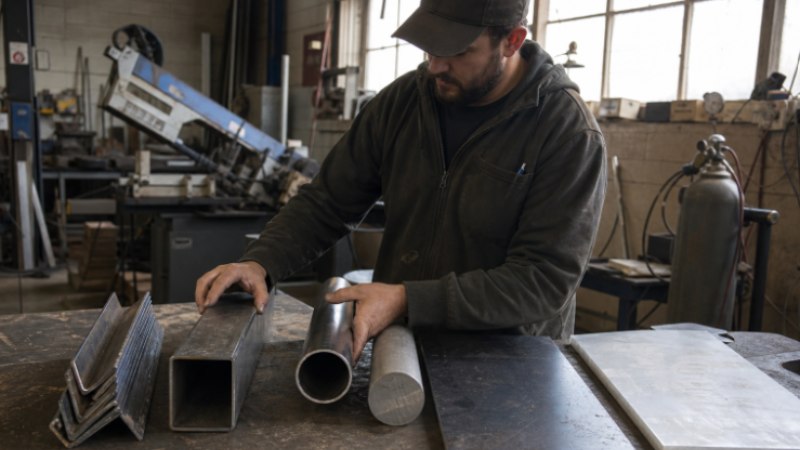
Why Material Choice Matters
Metal selection affects more than the first invoice. It influences safety, appearance, installation time, maintenance, and the longevity of the finished project’s performance as intended. A basic indoor workbench frame may do well with standard steel. At the same time, an exposed railing, trailer component, or outdoor enclosure may need a more durable finish or better corrosion resistance from the start. Before buying, compare the project requirements with the available sizes, grades, and finishes from a reliable metal supply in Utah. Choosing material that fits the actual job can reduce unnecessary cutting, simplify fabrication, and prevent the cost of replacing an early failure.
Start With Project Needs
A clear project brief makes material selection much easier. Instead of beginning with a familiar material name, define what the finished part must do and what conditions it will face. This approach keeps appearance, durability, fabrication, and budget in the same conversation.
- What will the metal support, cover, brace, or protect?
- Will people walk on it, lean against it, touch it, or see it regularly?
- Will it stay indoors, outdoors, or in a wet or chemical-heavy setting?
- Does the part need drilling, bending, welding, painting, or powder coating?
- Will it face vibration, impact, repeated movement, or changing loads?
Compare Common Metal Forms
The same metal can perform very differently depending on its shape. Selecting the right form often improves stiffness and usability without simply adding more weight.
- Tube: Useful for frames, guards, rails, furniture, and supports that need a clean enclosed profile.
- Angle: A practical choice for corners, braces, shelf supports, and edge reinforcement.
- Channel: Helpful for open-sided structural members, tracks, and frames.
- Flat bar: Commonly used for straps, brackets, trim, tabs, and smaller supports.
- Plate: Suitable for base plates, gussets, covers, mounting surfaces, and heavy-duty fabricated parts.
- Round bar: Often used for pins, shafts, rails, decorative details, and machined components.
- Grating or expanded metal: Useful where drainage, airflow, traction, or visibility is important.
Choose Between Steel, Stainless Steel, and Aluminum
Carbon steel is widely used because it is strong, practical, and available in many forms. It works well for frames, brackets, supports, and general fabrication, but bare steel usually needs paint, coating, galvanizing, or other protection when moisture is expected. For structural applications, reviewing the AISC Specification for Structural Steel Buildings can help keep planning conversations informed. Stainless steel is often selected for its corrosion resistance and clean appearance. It can be a good fit for wet locations, frequently cleaned surfaces, food-related settings, and visible architectural features. Aluminum offers low weight and good resistance to many corrosive conditions, making it useful for signs, covers, transport parts, and lightweight structures. However, aluminum behaves differently under load and during welding, so connections and thickness should be planned accordingly.
Check The Environment And Exposure
The environment can shorten a metal project’s useful life long before normal wear becomes an issue. Review rain, snow, standing water, road salt, coastal air, cleaning chemicals, industrial exposure, heat, sunlight, and contact with dissimilar metals. Details such as trapped moisture and poor drainage can matter as much as the base material. A protective coating, a suitable finish, a drainage plan, or a different material may solve the problem. Stainless steel is not one single product, since different grades offer different balances of corrosion resistance, strength, and cost. Guidance on stainless steel selection and design reinforces the importance of matching the grade to the conditions, rather than simply labeling a material as stainless.
Balance Strength And Weight
Heavier is not automatically better. A part must have enough strength and stiffness for its span, load, and attachment points, but excessive weight can complicate delivery, handling, and installation. Consider whether the load is steady or repeated, whether vibration or impact is likely, and whether bending or twisting could occur. Thickness is only one factor. The metal grade, section shape, orientation, connection design, and unsupported distance all affect performance. Stairs, guardrails, platforms, structural repairs, and other safety-critical work should receive a professional design review before any materials are ordered or installed.
Plan For Cutting And Joining
A material that looks ideal on paper can create trouble if it does not suit the planned fabrication method. Confirm final dimensions first, then choose stock sizes and forms that limit unnecessary cuts, joints, and scrap.
- Confirm dimensions, tolerances, and the location of holes or fasteners.
- Check whether the material can be drilled, bent, cut, or welded with the available tools.
- Allow space for welds, bolts, coatings, drainage, and thermal movement.
- Review access for installation, maintenance, and safe edge finishing.
Avoid Common Buying Mistakes
- Choosing by price alone and ignoring lifetime maintenance.
- Ordering material that is too thin for the span or expected load.
- Forgetting to specify grade, thickness, length, finish, and surface condition.
- Mixing inches and millimeters on drawings or cut lists.
- Leaving coating and corrosion protection decisions until fabrication is complete.
- Buying extra stock without a cutting plan.
- Skipping qualified advice for load-bearing or public-facing installations.
Use A Simple Selection Process
- Describe the job: Define the purpose, location, dimensions, and expected load.
- List the risks: Note moisture, salt, heat, chemicals, impact, vibration, and public contact.
- Pick the form: Choose the tube, angle, channel, bar, plate, or open pattern that best fits the design.
- Compare materials: Review strength, weight, corrosion resistance, finish, cost, and availability.
- Check fabrication: Confirm compatibility with the planned cutting, drilling, bending, and joining methods.
- Verify the order: Recheck dimensions, grade, quantity, finish, and delivery requirements.
Common Questions
Which Metal Is Best For Outdoor Projects?
The best choice depends on moisture, sunlight, temperature changes, airborne salt, and maintenance expectations. A corrosion-resistant material may be appropriate, but coated or galvanized steel can also be effective when the finish and drainage details suit the setting.
Is Thicker Metal Always Stronger?
More thickness can help, but it is not the only answer. Shape, alloy, span, support locations, load direction, and attachment quality can have just as much influence on the finished part.
When Is Aluminum A Better Choice?
Aluminum is often a good option when weight is a concern for handling, transport, panels, covers, signs, and certain structures. The design should account for its different stiffness, welding behavior, and connection needs.
Conclusion
Good metal selection begins with the job, not a material name. Define the intended use, review the environment, identify exposure to moisture, heat, chemicals, or repeated loads, and choose an effective form for the application. Compare strength, weight, durability, corrosion resistance, availability, and overall cost before ordering. It is also important to confirm fabrication needs, including cutting, bending, welding, machining, finishing, and installation requirements. Choosing a material that is easy to source and work with can help prevent delays and unnecessary modifications later. Taking these factors into account early can reduce material waste, improve project efficiency, and help ensure the finished component performs as expected. A thoughtful selection process supports safer work, cleaner results, more predictable costs, and a finished project that can withstand the conditions it was designed to handle for years to come.