
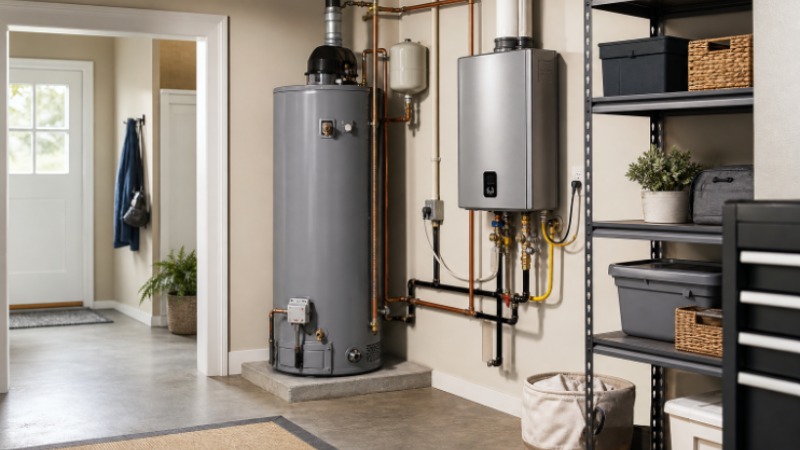
Choosing between a tankless and traditional water heater is not simply a question of which technology is newer. The best option depends on how your household uses hot water, the space available, and what your gas or electrical system can support. Homeowners who are considering an upgrade can start by speaking with tankless water heater installers in Provo, UT about real-world sizing, venting, and utility requirements.
A water heater should provide comfortable, dependable service without creating unnecessary installation costs or surprise performance issues. Tankless units can be a strong long-term choice, while a properly sized storage tank remains a practical and reliable solution for many homes.
How The Two Systems Work
A traditional storage water heater keeps a set volume of water hot inside an insulated tank. When someone opens a hot-water fixture, heated water leaves the tank, and colder replacement water enters. The burner or heating elements then restore the tank temperature.
A tankless unit uses a flow sensor and a heat exchanger to heat water only after a fixture calls for it. This reduces the energy used to keep a large reserve hot throughout the day. However, “endless hot water” only applies while demand stays within the unit’s rated output. The U.S. Department of Energy offers useful background on tankless or demand-type water heaters and their efficiency considerations.
Tankless And Traditional Systems At A Glance
- Hot-water supply: A tank is limited by capacity and recovery rate. A tankless system can run continuously if the required flow stays within its rating.
- Upfront investment: Traditional tanks usually have lower equipment and replacement costs. Tankless systems often cost more, especially when utility upgrades are needed.
- Space: Tanks require floor space. Tankless models generally mount on a wall.
- Energy use: Storage tanks have standby losses. Tankless units heat only during demand.
- Maintenance: Tanks need sediment, anode, and safety checks. Tankless units may need descaling, filter cleaning, and vent inspections.
Where Tankless Water Heaters Make Sense
Tankless systems can work particularly well in homes with limited utility-room space, frequent hot-water shortages, or owners who expect to stay in the property for years. They are also appealing during remodels when freeing up floor area matters.
The trade-off is installation complexity. A gas tankless model may need a larger gas line, new intake and exhaust venting, and a condensate drain for a condensing design. An electric tankless unit can require multiple high-amperage circuits and may overwhelm an older electrical panel.
Where Traditional Water Heaters Still Work Well
Traditional tank water heaters remain a smart option for budget-focused replacements, especially when the existing location, fuel type, and connections can be reused. A properly sized tank also provides a useful reserve when several fixtures operate close together.
For example, a household that typically runs two showers, a dishwasher, and laundry during a narrow morning window may prefer the buffer provided by a tank. That does not make tankless unsuitable. It simply means the tankless unit must be sized for the actual combined flow rate and local temperature rise.
Upfront Cost And Long-Term Expenses
Compare the complete project cost, not just the appliance price. Include removal of the old unit, labor, permits, venting, gas-line changes, electrical work, condensate drainage, routine maintenance, and possible repair costs.
As a simple example, a one- or two-person household with modest, staggered hot-water use may see less value from paying for major tankless infrastructure upgrades. A larger household with regular back-to-back showers and a long ownership horizon may place more value on on-demand operation and reclaimed floor space. Neither example is a quote, and local conditions can change the outcome substantially.
Sizing For Real Household Demand
Household size is only a starting point. Consider the number of bathrooms, peak shower times, dishwasher and washer use, fixture flow rates, incoming groundwater temperature, and available gas or electrical capacity.
Tankless equipment is commonly evaluated by gallons per minute at a given temperature rise. Storage tanks are often judged by tank capacity and first-hour rating. A professional should calculate the demand created when the busiest fixtures run at once, rather than relying on a generic “three-bedroom home” recommendation.
Installation Details That Can Change The Decision
Gas Tankless Systems
Gas models need correctly designed combustion air and exhaust venting. They may also need larger gas piping, especially when replacing a lower-input tank heater. Condensing models require a suitable condensate drain.
Electric Tankless And Traditional Tanks
Electric tankless units can require substantial panel capacity and dedicated circuits. Traditional tank replacements are often simpler when fuel type stays the same, but they still need proper temperature-and pressure-relief protection, drainage considerations, clearances, and local code compliance.
Maintenance And Expected Service Life
Traditional tanks benefit from periodic sediment flushing, pressure-relief valve checks, and anode-rod inspections when appropriate. Watch for corrosion, leaks, rust-colored water, or moisture around the base.
Tankless units need manufacturer-recommended descaling, especially in hard-water areas. Inlet filters, vents, condensate lines, and error codes should also be checked. Service life for either type varies with installation quality, water conditions, usage, and maintenance.
Should You Compare A Heat Pump Water Heater?
A heat pump water heater stores hot water in a tank but moves heat from the surrounding air instead of relying solely on electric resistance elements. It can be a highly efficient choice for homes with suitable space, airflow, drainage, and electrical capacity. It may produce some fan noise and has storage-based recovery limits. Learn more about how heat pump water heaters work before deciding whether this third option fits your home.
A Simple Decision Guide For Homeowners
- Identify the main goal, such as lower upfront cost, more hot water, less floor space, or efficiency.
- List the fixtures and appliances likely to run at the same time.
- Review gas capacity, electrical-panel capacity, venting, and drainage.
- Request complete installation estimates, including required upgrades and permits.
- Compare a tank, tankless, and heat pump option when the property can support them.
- Choose the system that fits the home, rather than the one with the strongest marketing claim.
Common Questions
Does A Tankless Water Heater Always Save Money?
No. It can reduce standby energy loss, but the financial result depends on fuel costs, usage habits, installation scope, maintenance, and how long you own the home.
Can A Tankless System Run Several Showers At Once?
Yes, if it has adequate flow capacity for the required temperature rise. Cold incoming water and high-flow fixtures increase the demand on the unit.
Can A Home Switch From A Tank To A Tankless System?
Often, yes. The gas line, electrical service, venting, water piping, and condensate drainage should be evaluated first.
Final Thoughts
Tankless and traditional water heaters can both be sensible choices in 2026. Tankless systems are often ideal for space-conscious homes and steady on-demand use, while traditional tanks can offer lower replacement costs and dependable performance. A careful review of peak demand, infrastructure, maintenance, and long-term plans will lead to a better decision than choosing based on hype alone.