
Seasonal decorating does not require a new sofa, a full repaint, or a cart full of themed accessories. A few purposeful changes in color, fabric, lighting, and natural details can make familiar rooms feel refreshed. Whether you prefer to shop locally or gather ideas online, a seasonal home decor shop near Salt Lake City can be a useful starting point for finding small accents that fit your style.
The goal is not to copy every passing look. It is to create a home that feels welcoming in every season while remaining practical for daily life. Keep larger pieces steady, then let the smaller visual layers change as the weather, light, routines, and gatherings shift throughout the year.
Why Seasonal Decor Works
Small visual changes give a room a new rhythm without disrupting the way it functions. Swap pillow covers, change a framed print, place branches in a vase, or trade a heavy throw for a lightweight cotton layer. These details draw attention to the season while allowing your home to remain recognizably yours. Thoughtful interior design considers both appearance and how people use a space, which is why a simple, livable plan usually feels better than a complete decorative overhaul.
Build a Year-Round Base
A flexible foundation makes every seasonal reset easier. Choose durable seating, simple window treatments, a versatile rug, and wall colors that will not compete with changing accents. Warm whites, soft taupes, muted greige, natural wood, charcoal, and understated patterns work especially well because they can pair well with both bright summer colors and deeper winter tones.
Suggested Base Pieces
- A comfortable sofa or chair in a flexible neutral shade.
- A durable rug with a subtle pattern or low-contrast color.
- Neutral curtains, shades, baskets, and everyday tableware.
- A few dependable display surfaces, such as a console, coffee table, or shelf.
Choose a Seasonal Color Plan
Pick two or three accent colors and repeat them in small ways across the home. This might mean using the same shade of green on a kitchen towel, a living room pillow, and a bedroom vase. In spring, try soft green, warm white, pale yellow, or gentle blue. Summer works well with sun-washed neutrals, coral, sky blue, and leafy green. For fall, consider rust, olive, clay, muted gold, or deep navy. Winter can feel calm and rich with cranberry, evergreen, cream, charcoal, or icy blue.
Refresh the Entryway
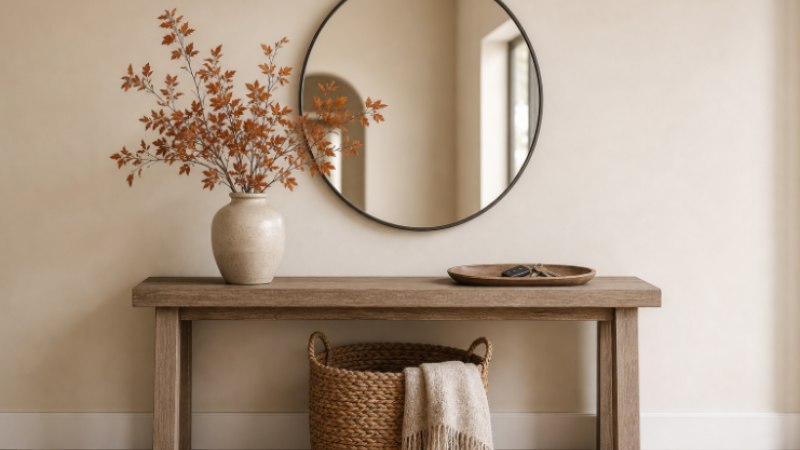
The entryway is the most efficient place to start because even a few updates make an immediate impression. Replace a small runner or washable mat, add a seasonal arrangement, and use a tray or bowl to corral keys and mail. A mirror can reflect daylight, while one larger display often looks more intentional than several tiny objects competing for attention.
Style the Living Room
In the living room, change one visual layer at a time. Begin by removing items that no longer fit the season, then update soft goods such as pillows, throws, and slipcovers. Add a single natural element, like flowers, greenery, or sculptural branches. Finish by reassessing the room from the doorway. If it feels crowded, remove one item before adding another.
Update the Kitchen and Dining Area
Use practical pieces to bring seasonal character into the kitchen and dining area. Dish towels, cloth napkins, serving boards, fruit bowls, and a low centerpiece can all do the work without creating more cleaning or blocking meal preparation. Keep the dining table usable, especially in smaller homes. A simple runner and a bowl of citrus in summer or pears in fall can be enough.
Create a Calmer Bedroom
Bedrooms need quieter changes than shared rooms. Choose lighter bedding and breathable layers in warm months, then bring in a heavier quilt, knit throw, or warmer-toned pillow cover as temperatures drop. Rotate one small piece of art, soften bedside lighting, and limit decor to one or two surfaces. The room should feel restful, not like a storage area for seasonal items.
Use Lighting and Texture
Texture can communicate the season without relying on literal motifs. Linen, cotton, ceramic, and woven fibers feel airy for spring and summer. Wool, velvet, brushed metal, darker wood, and heavier knits add comfort in fall and winter. Layer overhead fixtures with lamps and indirect light to create a more relaxed evening atmosphere. If you use candles, follow basic home fire prevention guidance and keep open flames away from fabric, greenery, children, and pets.
Store and Reuse Seasonal Pieces
A good storage system prevents seasonal decorating from becoming expensive or overwhelming. Sort items by season, remove duplicates and damaged pieces, label clear bins, and wrap fragile objects before storing them. Keep favorite items near the front and make a brief note of where specialty pieces are packed. Reuse versatile accents in different rooms. A runner can move from a dining table to an entry console, while a bowl can hold flowers, fruit, pinecones, or ornaments.
Common Seasonal Decor Mistakes
- Changing too many items at once and losing the room’s sense of calm.
- Choosing colors that do not clash with permanent flooring, cabinets, or furniture.
- Buying decorations before deciding where to display them.
- Blocking walkways, counters, tables, or other useful surfaces.
- Mixing several themes instead of committing to one simple direction.
- Keeping every item year after year instead of editing the collection.
Simple Seasonal Reset Checklist
- Pack away and clean the previous season’s accents.
- Select one color story for the next season.
- Update textiles in one or two main rooms.
- Refresh the entryway with one useful and one decorative change.
- Add a natural element, then check the room’s lighting after dark.
- Remove anything that feels crowded, inconvenient, or out of place.
Conclusion
Seasonal decorating works best when it is simple, useful, and personal. Build a steady foundation, choose a limited color plan, and make small adjustments based on how each room is used. With a few thoughtful changes each season, your home can feel fresh and welcoming without creating unnecessary spending, clutter, or storage problems.