
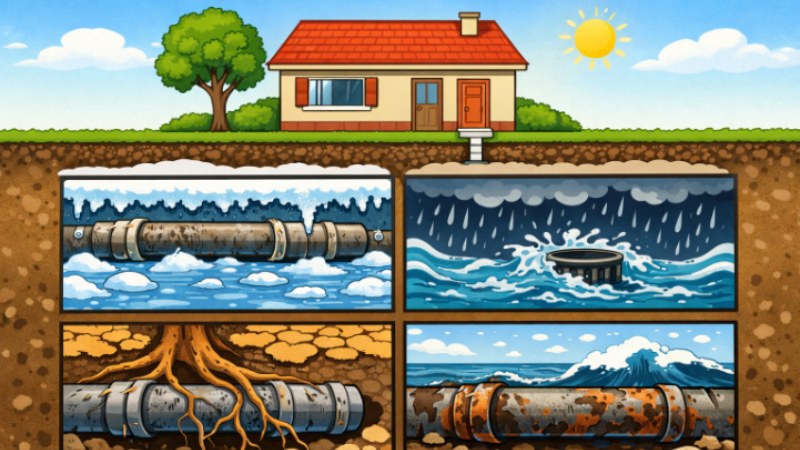
Weather patterns and climate have a profound impact on the durability and function of residential plumbing systems. Understanding how events like heavy rain, drought, and extreme cold can affect your sewer lines is crucial if you want to avoid costly repairs and keep your home safe and sanitary. For those experiencing frequent plumbing issues, knowing when to seek sewer line repair and replacement in Ruston LA can be critical to preventing long-term damage.
Weather issues can present in subtle forms, such as ground shifting after rain, or in more obvious ways, like sewer backups after a major storm. The influence of climate on pipes is not often visible, which makes routine awareness and proactive care necessary to prevent major failures.
It is also important for homeowners to recognize that the timing and severity of weather impacts fluctuate by region and property location. For example, the risks faced by someone living in a floodplain differ dramatically from those faced by homeowners located in dry, inland areas. Adapting maintenance practices to local conditions is key for long-term plumbing health.
Scientific advances and new municipal guidelines are continually emerging to help address these challenges. For more information about current approaches in protecting urban wastewater infrastructure, visit this article by the American Society of Civil Engineers.
Temperature Fluctuations
Significant temperature swings, such as those during winter thaw and summer heat, cause soil to expand and contract. This movement can put intense pressure on both new and aging sewer lines, leading to weakened joints, cracks, or full pipe collapses. In colder climates, the freeze-thaw cycles are especially hard on underground systems, where the alternation between ice and water can worsen small flaws in the lines.
Older pipes made of clay, cast iron, or other brittle materials are the most vulnerable to damage during temperature changes. When the soil shifts, gaps can appear around pipes, which reduces their support and exposes them to more stress with every season.
Heavy Rainfall
Periods of sustained rain can saturate the ground, making the soil heavier and increasing pressure around sewer lines. When water has nowhere to go, it can push soil into pipes, misalign joints, and force cracks wider. Flooding and heavy runoff often overwhelm older sewer systems that are not designed for large surges of water, raising the risk of both sewer backups in the home and raw sewage spilling into local waterways.
Heavy rain events are becoming more common in many regions due to changes in climate patterns. Homeowners can find more insight on the science behind rainfall and its effect on public health in this Popular Science article.
Drought Conditions
While prolonged dry periods may seem harmless, they pose a hidden threat. As moisture leaves the soil, the earth around your sewer lines can shrink and settle unpredictably. This makes existing pipes lose some of their support and allows them to shift, break, or collapse. Droughts can be doubly dangerous because tree roots searching for water might invade pipes, causing severe blockages or even growing large enough to break apart the lines from within.
Routine inspection and maintenance can help identify tree root intrusion before it becomes a serious plumbing emergency. Homeowners in areas with frequent droughts are encouraged to have their sewer lines checked regularly by a professional.
Coastal Climates
Living near the coast not only brings humidity and salty air but also accelerates the corrosion of metal sewer pipes, which shortens their lifespan. Salt deposits and sea spray can eat away at pipe exteriors, especially for older metal or concrete lines. Additionally, areas near waterlines are more prone to soil movement, erosion, and flooding, all of which can lead to pipe misalignment, increased cracking, and a greater risk of sewer backups during storms.
For those in coastal areas, opting for pipe replacement materials that resist corrosion (such as PVC or specially coated pipes) is a wise long-term investment.
Preventive Measures
While weather events cannot be controlled, homeowners can take several steps to protect their plumbing system from these external forces:
- Schedule professional sewer line inspections on a regular basis to catch small issues early.
- Improve drainage by grading land around your foundation so that water flows away from your home rather than pooling over pipe areas.
- Install backflow prevention devices to minimize the risk of sewer backups during heavy weather.
- If your home has aging pipes, consider replacing them with modern materials known for their resilience against extreme environmental stressors. Modern PVC or HDPE pipes often outlast traditional materials in most climates.
Staying ahead of these problems protects your home and saves money in the long run. Proactive care is far better than dealing with catastrophic sewer failures after a major storm or freeze.
By learning how different weather patterns can affect your sewer system, you are better equipped to maintain and upgrade your home’s plumbing, avoiding outages and ensuring the longevity of your sewer lines for years to come.