
Ensuring the consistent delivery of clean, reliable water to homes and businesses depends on the infrastructure that makes up a community’s water distribution system. The choice of materials for piping and connections is crucial, as it impacts service life, maintenance intervals, water quality, and overall efficiency. Understanding these materials and their specific strengths helps cities, engineers, and facility managers design infrastructure that remains dependable for decades. For those involved in water systems, partnering with knowledgeable suppliers such as Cruco Mill & Industrial Supply helps ensure you have access to the right products for your specific needs.
Each material used in water distribution systems brings unique performance and economic considerations. Innovation in the materials sector also continues to introduce alternatives that provide better corrosion resistance and sustainability, reducing costs and environmental impacts in the long run. Knowing the characteristics and best applications of each pipe type improves decision-making, whether for new installations or upgrades to older systems.
Because water infrastructure must withstand a range of pressures, temperatures, and chemical exposures over its lifespan, material selection is an investment in both present and future water reliability. Municipalities that invest thoughtfully in distribution materials reduce risks such as main breaks, leaks, downtime, and unnecessary water loss while improving public health outcomes. Ultimately, an optimized water system relies on choosing piping that matches each project’s unique challenges, balancing cost, longevity, environmental factors, and regulatory compliance along the way.
Ductile Iron Pipe
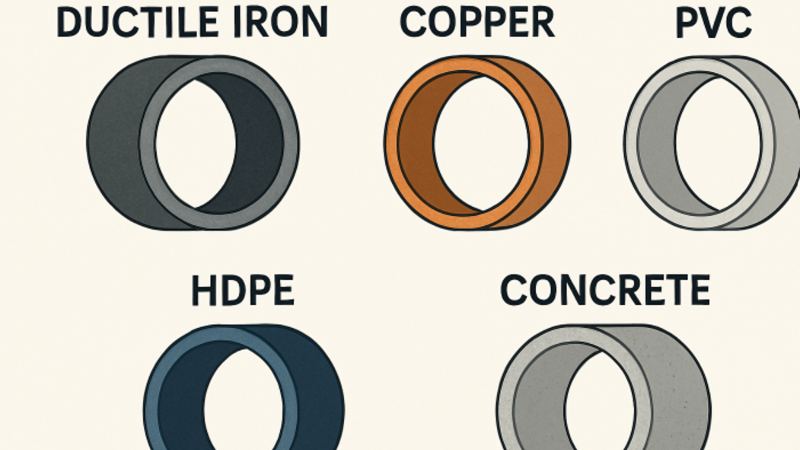
Ductile iron pipe is a mainstay of large water transmission and distribution networks due to its robust construction, strength, and adaptability. Manufactured through centrifugal casting, ductile iron’s composition provides exceptional resistance to mechanical stress and external loading. Internally, pipes are typically lined with cement mortar to enhance corrosion protection and minimize biological buildup. Externally, modern coatings or polyethylene wrappings are often used to extend lifespan. Many installations remain in service for 50 to 100 years, making ductile iron a favorite for municipal trunk lines and high-service demand areas. See more information on its properties from the American Water Works Association.
Copper Tubing
Copper tubing is highly valued in household plumbing and small-diameter service lines. Its popularity stems from its inherent corrosion resistance and the ease with which it can be molded, cut, and joined using soldering, compression fittings, or flare connections. Copper is available in both flexible, annealed tubing for easier routing and rigid, drawn tubing for straight-line installations. Safe for drinking water and recyclable, copper also resists bacterial growth on its surface. However, due to fluctuating prices and growing concern about resource sustainability, some municipalities are exploring alternatives for new projects. Refer to guidance from the Centers for Disease Control and Prevention regarding safe materials for potable water systems.
Polyvinyl Chloride (PVC) Pipe
PVC has revolutionized water distribution due to its cost-effectiveness, lightweight composition, and ease of handling. The smooth internal surface of PVC pipes reduces friction loss, increasing flow efficiency and minimizing energy consumption in pumping systems. With its high resistance to chemical attack and corrosion, PVC is commonly used for cold-water mains and branch systems, especially where soil conditions could corrode metal pipes. However, prolonged exposure to UV light can degrade PVC unless it is properly protected during storage and installation. Some constraints also exist for hot water and high-pressure environments, where other materials can offer better performance.
High-Density Polyethylene (HDPE) Pipe
HDPE pipes are known for their flexibility, high chemical resistance, and seamless joints, which greatly reduce the risk of leaks. Their lightweight and flexibility also enable trenchless installation methods such as horizontal directional drilling and pipe bursting, which are useful for retrofitting or installing under difficult or urban terrain. HDPE is durable in extreme climates and resists scale buildup, making it a common choice for areas with aggressive soil or frequent seismic activity. It is also gaining popularity as municipalities seek to minimize non-revenue water losses from leaks or main breaks.
Cross-Linked Polyethylene (PEX) Pipe
PEX piping delivers exceptional flexibility and ease of installation, especially in residential and small commercial buildings. Cross-linking improves durability, strength, and resistance to cracking, making these pipes suitable for hot and cold potable water distribution. PEX resists scale and chlorine degradation, is less susceptible to bursting during freezing, and often uses simple crimp or push-fit connectors, speeding installation. However, PEX is less suitable for outdoor or direct sunlight exposure unless specifically formulated for UV resistance.
Concrete Pressure Pipe
Concrete pressure pipes, such as prestressed concrete cylinder pipe (PCCP), are essential for large-diameter, high-pressure water mains and infrastructure. Their layered construction, typically including a concrete core and a prestressed steel cylinder, offers outstanding strength and durability. PCCP is particularly useful for cities and industrial sites that move large volumes of water under significant pressure. Maintenance and repair can be more involved, but their robust performance justifies deployment in major trunk or trunk-distribution lines. Learn more about PCCP from the Wikipedia article on Prestressed Concrete Cylinder Pipe.
Lead Service Lines
Lead pipes were once commonplace for service connections, but their use has been phased out due to severe health hazards, particularly for infants, young children, and pregnant women. Even low levels of lead can cause neurological and developmental harm. Today, utilities prioritize replacing lead service lines with safer materials, often as part of federally or state-mandated programs. Ongoing replacement initiatives and strict regulatory oversight have dramatically reduced the risk of lead exposure in public water systems.
Factors Influencing Material Selection
Choosing the most appropriate material for a water distribution system requires balancing several critical considerations:
- Corrosion Resistance:The material must be compatible with both the delivered water and the surrounding soil to prevent leaks and failures over time.
- Durability:Lifespan, resistance to pressure surges, and performance in local environmental conditions drive reliability and lifecycle costs.
- Cost:Upfront installation costs, long-term maintenance needs, and anticipated repair cycles factor into responsible decision-making.
- Ease of Installation:Materials that are lightweight, flexible, or employ simpler connection systems can reduce labor hours and downtime.
- Environmental Impact:Pipe recyclability, energy use during production, and overall sustainability are also important for modern infrastructure needs.
As material science evolves, so do the options available to engineers and utilities. Staying informed of emerging materials and best practices helps ensure long-term reliability, public health, and financial efficiency for communities everywhere.